
Shift in Global Reserve Currencies
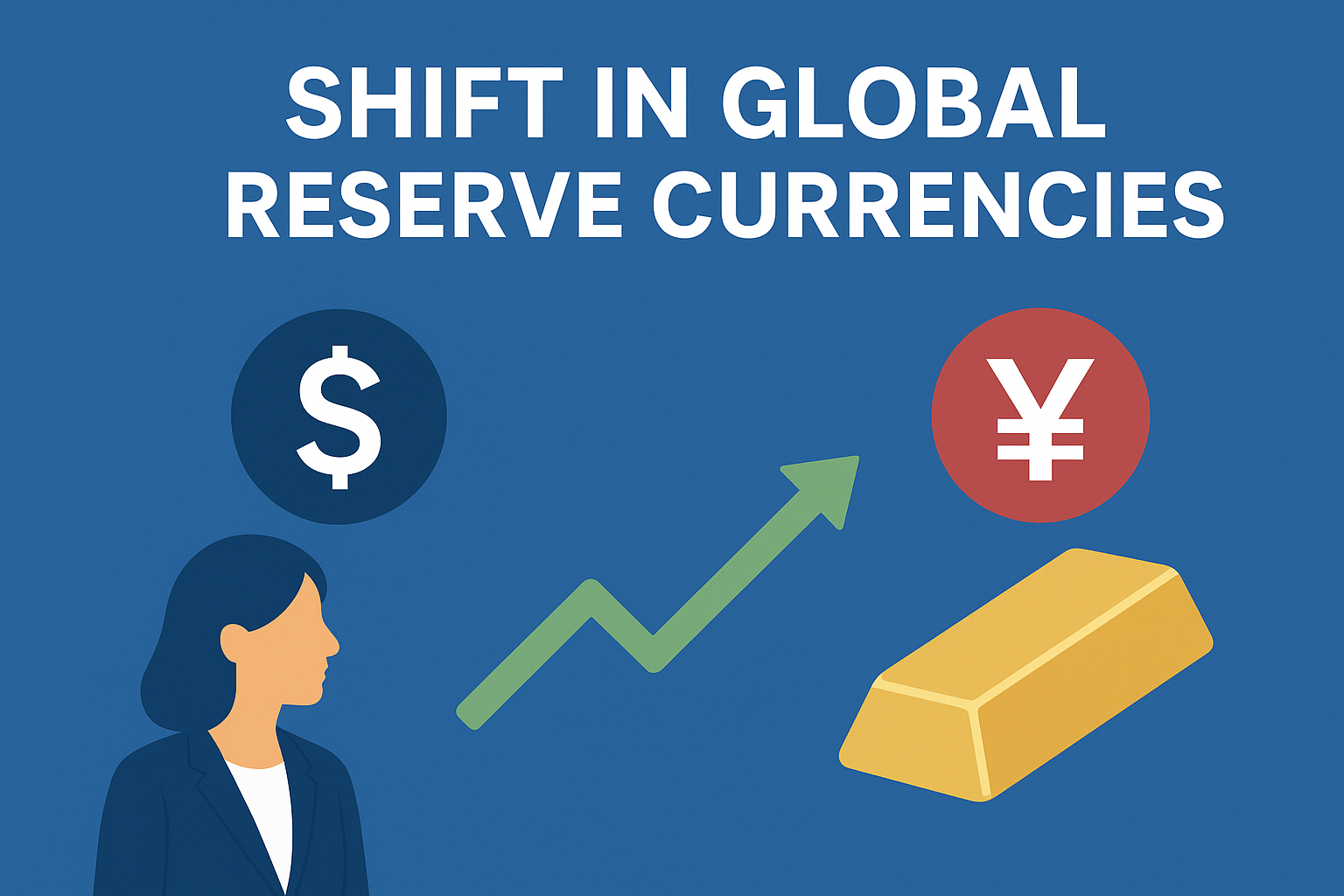
The Emerging Financial Landscape
By Savings UK Ltd
For decades, the U.S. dollar has been the undisputed king of global finance—serving as the primary reserve currency, the dominant medium for international trade, and the benchmark for commodities such as oil and gold. However, recent developments in international finance suggest that a significant shift is underway. The combination of geopolitical tensions, evolving monetary policies, technological innovation, and strategic diversification by central banks is reshaping the global reserve currency landscape.
This transformation has profound implications for foreign exchange markets, the International Monetary Fund’s (IMF) Special Drawing Rights (SDRs), and the role of gold as a monetary anchor. The dollar’s gradual decline in dominance is not an overnight phenomenon, but the signs are increasingly difficult to ignore.
The Historical Dominance of the Dollar
Since the Bretton Woods Agreement of 1944, the U.S. dollar has played a central role in the global economy. Initially pegged to gold at $35 per ounce, the dollar became the backbone of international settlements. Even after the gold standard was abandoned in 1971, its dominance persisted—driven by the size of the U.S. economy, deep and liquid capital markets, and the dollar’s widespread acceptance in foreign exchange transactions.
Today, the dollar still accounts for around 58% of global foreign exchange reserves, according to IMF data. But this is down from over 70% at the turn of the millennium. The steady decline reflects the increasing diversification strategies adopted by central banks, seeking to hedge against currency risk and geopolitical instability.
The IMF’s SDR as a Balancing Tool
One of the most important instruments in this shifting landscape is the Special Drawing Right (SDR), an international reserve asset created by the IMF in 1969. The SDR is not a currency but a basket of major currencies—currently the U.S. dollar, euro, Chinese renminbi, Japanese yen, and British pound. Its value is calculated daily based on exchange rates between these currencies.
In recent years, the IMF has promoted SDR allocations as a way to strengthen global liquidity without over-reliance on any single currency. The inclusion of the Chinese renminbi in the SDR basket in 2016 marked a turning point, signaling China’s growing influence in international finance. For emerging economies, the SDR provides a stable, diversified asset that can be used in foreign exchange interventions or for balance of payments support.
SDR allocations surged during the COVID-19 pandemic when the IMF issued $650 billion worth in 2021—the largest in its history—to help countries weather the economic shock. This move not only increased the SDR’s relevance but also reinforced the argument for a more multilateral reserve system.
Drivers of Dollar Decline
The dollar’s reduced share in global reserves is driven by several intertwined factors:
-
Geopolitical Shifts
U.S. sanctions, particularly the freezing of Russian foreign reserves in 2022, have raised concerns among other countries about over-reliance on the dollar. This has accelerated the search for alternative settlement systems and reserve diversification. -
Economic Competition
The rise of China as the world’s second-largest economy—and its Belt and Road Initiative (BRI)—has expanded the use of the renminbi in trade and investment. Currency swap agreements between the People’s Bank of China and other central banks have facilitated bilateral trade without using the dollar. -
Technological Innovations
The development of central bank digital currencies (CBDCs) could alter the reserve currency structure by making cross-border settlements faster, cheaper, and less dependent on existing dollar-based networks like SWIFT. -
Fiscal Pressures in the U.S.
Rising U.S. debt levels, political polarization, and persistent trade deficits have undermined some investors’ confidence in the long-term purchasing power of the dollar.
Foreign Exchange Market Implications
The foreign exchange market—handling trillions of dollars in daily transactions—will inevitably adjust to this multipolar reserve currency environment. Traditionally, the dollar’s liquidity advantage meant that it served as the intermediary currency for many FX trades (e.g., converting Brazilian real to Japanese yen often required first converting to U.S. dollars). As reserve diversification deepens, more trades could bypass the dollar entirely.
This shift could lead to greater volatility in FX markets in the short term, as traders adapt to new liquidity patterns. However, in the long run, a more balanced currency system could reduce systemic risk, as no single currency would dominate to the extent the dollar has.
The Resurgence of Gold
Gold has always played a unique role in the global monetary system. While it no longer serves as the formal anchor for currencies, its status as a hedge against inflation, currency devaluation, and geopolitical uncertainty remains unmatched.
Central banks have been quietly increasing their gold reserves. According to the World Gold Council, 2022 and 2023 saw record levels of central bank gold purchases—led by emerging economies seeking to reduce dependence on the dollar. Gold’s appeal lies in its lack of counterparty risk; unlike foreign exchange reserves held in another country’s bonds, physical gold cannot be frozen or defaulted upon.
As the dollar’s dominance wanes, gold is regaining its status as a neutral, universally accepted store of value. Some analysts even suggest that a future reserve system could integrate gold more explicitly—possibly through tokenized gold-backed digital assets.
The Rise of a Multipolar Reserve System
Rather than a sudden replacement of the dollar by another currency, the more likely outcome is a multipolar reserve system—one in which several major currencies, SDRs, and gold share the stage.
In such a system:
-
The U.S. dollar would remain important, especially for North American trade and as a safe haven during crises.
-
The euro would continue to serve as the second-largest reserve asset, especially in Europe and Africa.
-
The Chinese renminbi would gain more ground in Asia and among countries participating in BRI projects.
-
The IMF’s SDR would be used more widely for official settlements, debt restructuring, and as a neutral store of value.
-
Gold would provide a non-fiat anchor to counteract currency risk.
This diversification could make the global financial system more resilient, but it also demands greater cooperation among nations to manage exchange rate fluctuations and liquidity needs.
Challenges to a Smooth Transition
Despite the clear trends, several obstacles could slow the transition:
-
Liquidity and Depth: The dollar still benefits from deep financial markets and vast liquidity pools. Alternatives like the renminbi are constrained by capital controls and less transparent financial systems.
-
Network Effects: Once a currency becomes dominant, global trade and finance infrastructure reinforce its use. Breaking these habits requires time and coordinated policy.
-
Geopolitical Rivalries: Competing national interests can hinder the establishment of cooperative reserve arrangements.
-
Market Volatility: As central banks adjust their reserves, exchange rates may experience unpredictable swings, complicating global trade and investment.
Looking Ahead
The shift in global reserve currencies will likely unfold over the next two to three decades rather than in a single disruptive moment. The dollar’s decline is gradual, not catastrophic, and it will remain a key pillar of the system for years. However, the direction of change is clear: a more balanced, diversified, and resilient global currency framework is emerging.
For policymakers, investors, and multinational corporations, understanding this evolution is critical. Strategic asset allocation must take into account not only traditional foreign exchange risk but also the broader geopolitical and structural changes shaping reserve management.
The IMF’s SDR framework, the strategic role of gold, and the steady rise of non-dollar trade settlements will all be central themes in this transition. As countries adapt to new realities, those who plan ahead—diversifying reserves, embracing technological change, and fostering international cooperation—will be best positioned to thrive in the new financial order.
Conclusion
The shift in global reserve currencies is one of the most significant financial transformations of the 21st century. Driven by geopolitical realignment, technological innovation, and the re-emergence of gold as a monetary safeguard, the process is challenging the decades-long supremacy of the U.S. dollar.
While the dollar is unlikely to vanish from its central role anytime soon, its share of global reserves will continue to decline. The future will belong to a multipolar system—one in which the IMF’s SDR plays a greater role, foreign exchange markets adapt to more diversified flows, and gold reassumes a more prominent position as a hedge and anchor.
For the global economy, this shift offers both opportunities and risks. The path forward will require adaptability, foresight, and a willingness to rethink the very foundations of international finance.
