
Green Energy Innovations
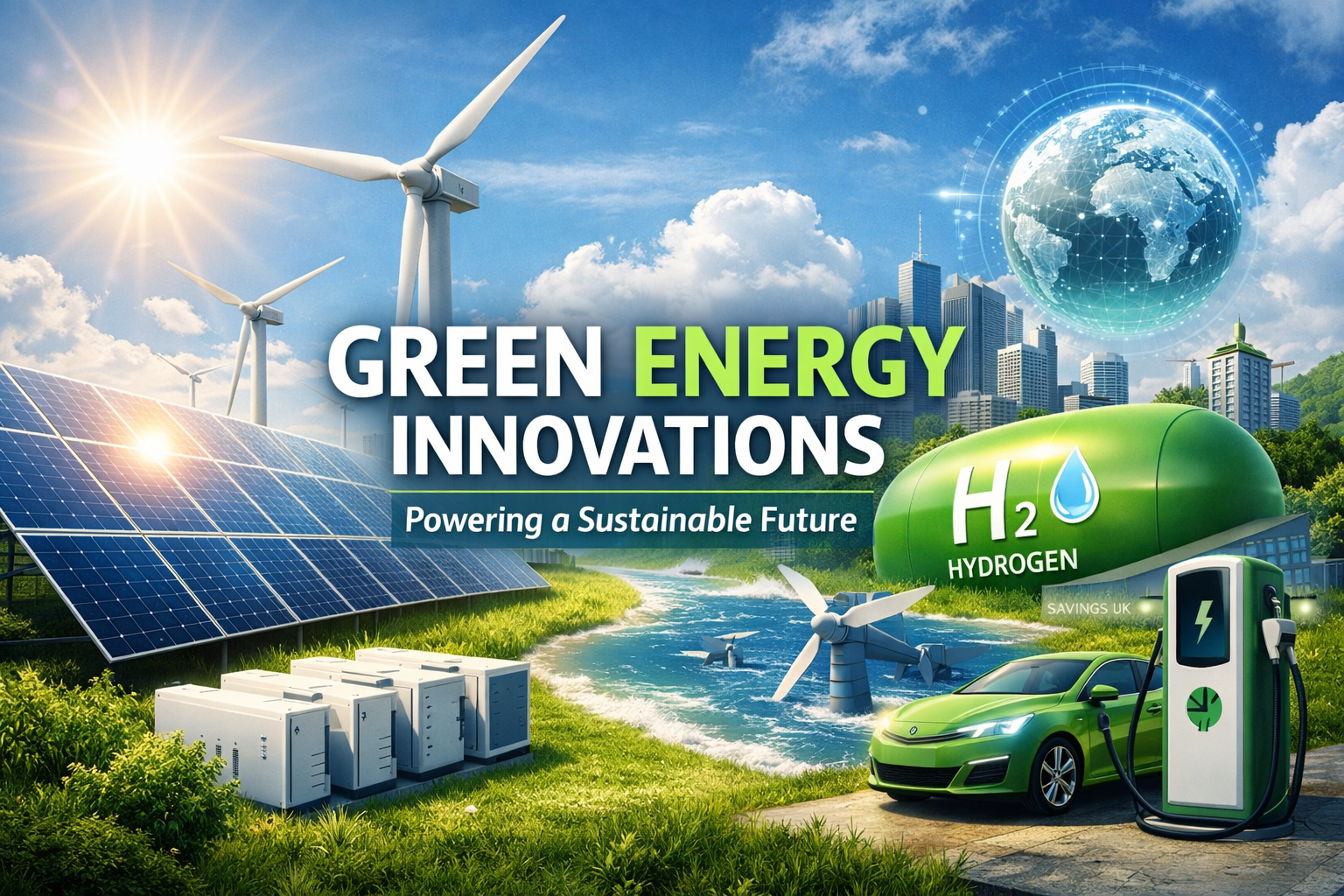
Powering a Sustainable Future
By Savings UK Ltd
Introduction
The global transition toward Green Energy and Renewable Energy is no longer optional—it is essential. Climate change, rising energy demand, and environmental degradation are pushing governments, businesses, and investors to adopt Clean Tech solutions. Today, Energy Innovation is reshaping how we generate, store, and consume power, paving the way for a truly Sustainable Future.
Savings UK Ltd recognizes that Eco Investing in Climate Tech is not just environmentally responsible but also financially rewarding. This article explores the latest innovations in green energy, their economic impact, and how investors can strategically position themselves in this transformative sector.
The Rise of Green Energy and Clean Tech
Green energy refers to power generated from natural, renewable sources such as sunlight, wind, water, and geothermal heat. These technologies reduce dependence on fossil fuels and significantly lower greenhouse gas emissions.
Over the past decade, renewable energy costs have dropped dramatically solar by over 80% and wind by around 60% making clean energy more accessible and competitive.
This shift has led to a surge in global investment, innovation, and policy support, positioning Renewable Energy as the backbone of future economies.
Key Green Energy Innovations Transforming the World
1. Advanced Solar Technologies
Solar energy continues to dominate the renewable landscape. Innovations include:
- Perovskite solar cells with efficiencies exceeding 34%
- Floating solar farms that optimize space usage
- Bifacial panels capturing sunlight from both sides
These advancements are making solar cheaper, more efficient, and scalable across diverse environments.
2. Next-Generation Wind Energy
Wind energy is evolving rapidly with:
- Floating offshore wind turbines accessing deep-water resources
- AI-optimized wind farms improving efficiency
- Larger turbines generating more power per unit
These innovations enable higher energy output and lower operational costs.
3. Energy Storage Revolution
One of the biggest challenges in renewable energy is intermittency. Breakthrough storage solutions include:
- Solid-state batteries with longer lifespans
- Iron-air and flow batteries for long-duration storage
- Pumped-storage hydropower systems for grid stability
Long-duration energy storage is becoming essential for balancing supply and demand, especially with rising electricity needs.
4. Green Hydrogen and Power-to-X
Green hydrogen is emerging as a game-changer in sectors where electrification is difficult, such as heavy industry and aviation.
- Produced using renewable electricity
- Enables energy storage and transport
- Supports decarbonization of industrial processes
Electrolyzer efficiency improvements and cost reductions are accelerating adoption.
5. Smart Grids and AI Integration
Digital transformation is at the core of Energy Innovation:
- AI-driven grid management
- Real-time energy forecasting
- Smart distribution systems
These technologies improve efficiency, reduce waste, and enable higher renewable penetration in energy systems.
6. Emerging Technologies
Other promising innovations include:
- Ocean energy (tidal and wave power)
- Geothermal advancements
- Fusion energy research
- Nanotechnology-enhanced solar cells
These technologies represent the next frontier in Climate Tech, with the potential to revolutionize global energy systems.
Economic and Environmental Impact
Green energy innovations are delivering both environmental and financial benefits:
Environmental Benefits
- Reduced carbon emissions
- Lower air and water pollution
- Conservation of natural resources
Economic Benefits
- Job creation (millions of clean energy jobs expected globally)
- Lower energy costs over time
- Increased energy security
Countries investing in renewable infrastructure are seeing long-term economic resilience and growth.
Challenges in Green Energy Adoption
Despite rapid progress, several challenges remain:
- High initial investment costs
- Grid integration issues
- Energy storage limitations
- Policy and regulatory barriers
For example, renewable energy curtailment and grid congestion highlight the need for smarter infrastructure and storage solutions.
Investment Opportunities in Green Energy
Savings UK Ltd emphasizes that Eco Investing in green energy offers diversified opportunities:
1. Renewable Energy Stocks
Companies involved in solar, wind, and hydropower projects.
2. Clean Tech Funds
Mutual funds and ETFs focused on sustainable technologies.
3. Infrastructure Investments
Projects related to smart grids, storage, and hydrogen systems.
4. Green Bonds
Fixed-income instruments funding environmentally friendly initiatives.
Strategic Green Energy Investment Framework
Below is a professional strategy table designed by Savings UK Ltd for investors looking to capitalize on Green Energy trends:
| Investment Area | Key Technologies | Growth Potential | Risk Level | Strategic Insight |
|---|---|---|---|---|
| Solar Energy | Perovskite cells, floating solar | Very High | Medium | Focus on emerging markets and utility-scale projects |
| Wind Energy | Offshore & floating turbines | High | Medium | Invest in regions with strong wind infrastructure |
| Energy Storage | Solid-state, iron-air batteries | Very High | High | Critical for future grid stability—long-term gains |
| Green Hydrogen | Electrolyzers, fuel cells | High | High | Early-stage investment with massive upside |
| Smart Grids | AI, IoT, automation | High | Medium | Backbone of renewable integration |
| Climate Tech | Carbon capture, nanotech | Emerging | High | Diversify for innovation-driven growth |
The Role of Policy and Global Collaboration
Governments play a crucial role in accelerating green energy adoption through:
- Subsidies and tax incentives
- Carbon pricing mechanisms
- International climate agreements
Global collaboration is essential to achieve net-zero targets and ensure equitable access to clean energy technologies.
Future Outlook: Toward a Sustainable Energy Ecosystem
The future of Renewable Energy lies in integration rather than expansion alone. Key trends shaping the future include:
- Hybrid energy systems (solar + wind + storage)
- Decentralized microgrids
- Electrification of transport and industry
- AI-powered energy ecosystems
By 2030, renewable energy is expected to dominate global power generation, supported by continuous Energy Innovation.
Conclusion
Green energy innovations are transforming the global energy landscape, offering a pathway to a cleaner, more resilient, and economically viable future. From advanced solar technologies to green hydrogen and smart grids, Clean Tech is redefining how the world powers itself.
For investors, Eco Investing in Climate Tech is not just a trend—it is a strategic necessity. Savings UK Ltd encourages a forward-looking investment approach that balances sustainability with financial growth.
The transition to a Sustainable Future is already underway. The question is not whether to invest in green energy—but how soon and how strategically.
