
Real Assets in Inflationary Times
Protecting Wealth in an Era of Rising Prices
By Savings UK Ltd
Inflation—the silent tax on purchasing power has returned to the forefront of global economic concerns. After years of relatively stable prices, surging demand, supply chain disruptions, and geopolitical tensions have pushed inflation rates to multi-decade highs in many economies. For savers and investors, the question is clear: how do you protect wealth when money is losing value?
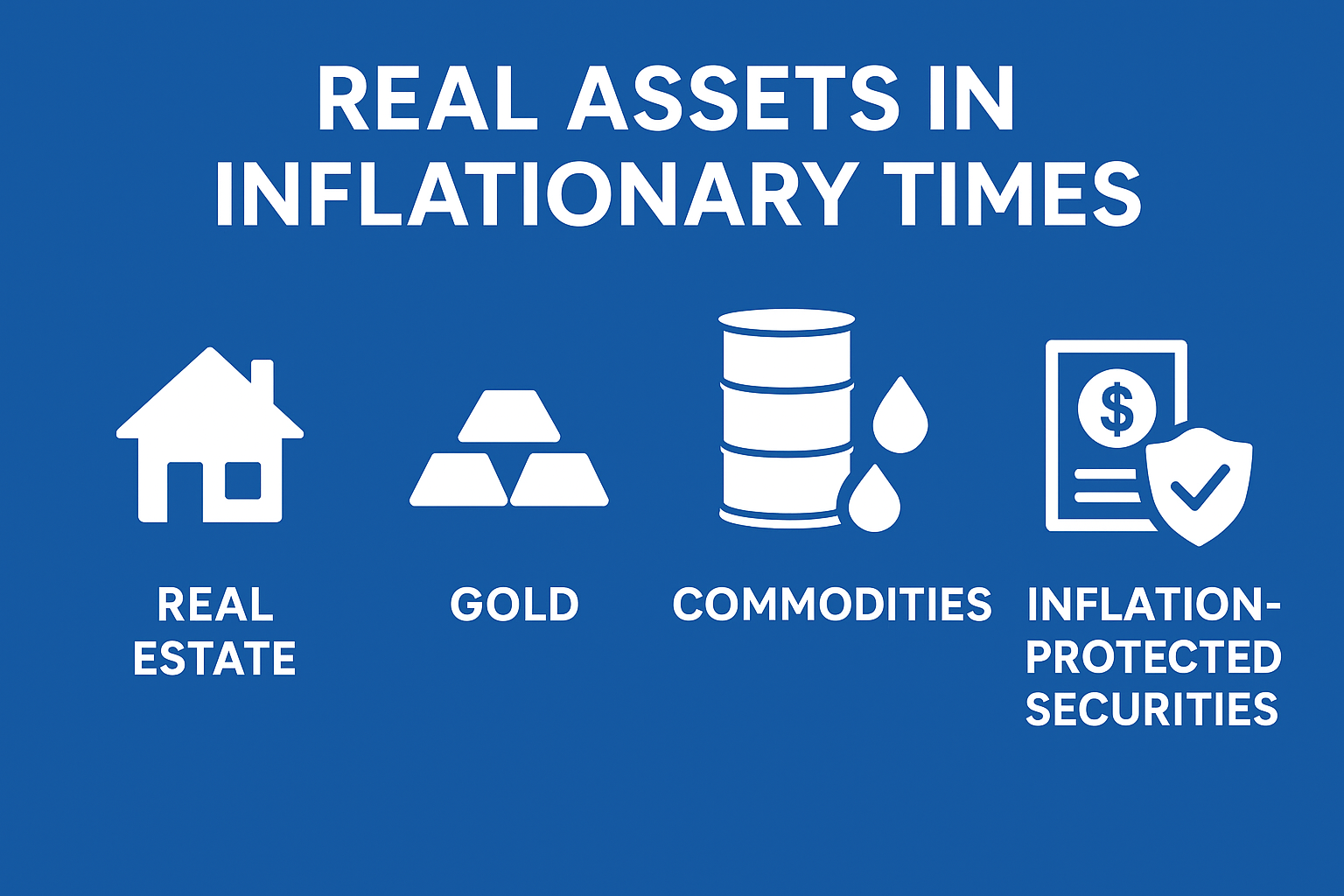
One answer lies in real assets—tangible investments that maintain or increase their value during inflationary periods. From real estate and gold to Treasury Inflation-Protected Securities (TIPS) and commodities, these assets have historically served as effective inflation hedges. Understanding their dynamics is essential for building resilient portfolios in uncertain times.
Why Inflation Threatens Traditional Portfolios
In a normal environment, traditional asset classes like bonds and cash provide stability and predictable returns. But in an inflationary setting, the real (inflation-adjusted) return on these assets often turns negative. A bond paying 3% interest is far less appealing when inflation is running at 6%.
Inflation erodes purchasing power, distorts interest rate expectations, and can cause volatility in both equity and fixed-income markets. It also undermines confidence in fiat currency, prompting investors to seek assets with intrinsic value or contractual inflation protection.
This is where real assets come in—offering a measure of insulation against rising prices.
Real Estate: Tangible Value and Income Growth
Real estate has long been a favored inflation hedge, thanks to its unique combination of tangible value, rental income, and potential for appreciation. Property values often rise alongside general price levels, while rental income can be adjusted upward over time to reflect inflation.
In commercial real estate, inflation-linked lease agreements can provide built-in protection. Residential landlords benefit from higher market rents in tight housing markets. Moreover, real estate investment trusts (REITs) offer a liquid way to gain exposure to property markets without the challenges of direct ownership.
However, not all real estate sectors perform equally well in inflationary times. Assets tied to essential services—such as logistics centers, healthcare facilities, and residential housing—tend to outperform luxury or discretionary segments. Additionally, rising interest rates (a common central bank response to inflation) can temporarily pressure property values, particularly in highly leveraged projects.
Gold: The Classic Inflation Hedge
When inflation surges, gold often shines. Unlike paper currency, gold is a finite physical asset that cannot be created at will by central banks. It has been a store of value for thousands of years, weathering countless economic upheavals.
Historically, gold has tended to perform well during periods of negative real interest rates—when inflation outpaces nominal yields. Investors turn to it not for income, but for preservation of purchasing power and diversification from paper-based financial assets.
Gold’s performance during inflationary periods is not always perfectly correlated, but it provides an essential psychological and safe-haven benefit. Central banks themselves have been increasing gold reserves, particularly in emerging markets, as part of a broader strategy to reduce dependence on fiat currencies.
Investors can gain exposure to gold through physical bullion, allocated storage, gold ETFs, or shares of mining companies. Each comes with its own balance of liquidity, storage costs, and risk.
TIPS: Bonds Built for Inflation
Treasury Inflation-Protected Securities (TIPS) are a unique category of U.S. government bonds specifically designed to protect investors from inflation. The principal value of a TIPS bond adjusts in line with the Consumer Price Index (CPI). When inflation rises, the principal increases, and so do the interest payments, since they are calculated as a percentage of the adjusted principal.
At maturity, TIPS investors receive the greater of the inflation-adjusted principal or the original amount invested. This structure guarantees that the purchasing power of the investment is preserved, at least relative to the CPI measure.
While TIPS offer a reliable inflation hedge, they come with certain caveats. If inflation is lower than expected, TIPS can underperform regular Treasury bonds. Also, they are subject to interest rate risk—when rates rise sharply, TIPS prices can still decline in the secondary market even as their inflation adjustment provides partial protection.
Commodities: Direct Exposure to Rising Prices
Commodities—including energy, industrial metals, and agricultural products—often experience price increases that outpace inflation during certain economic cycles. As inputs to the global economy, their prices are directly tied to supply-demand imbalances, geopolitical risks, and currency movements.
Energy commodities like oil and natural gas are particularly sensitive to inflationary pressures because they impact production and transportation costs across industries. Similarly, industrial metals such as copper and aluminum rise when infrastructure spending increases, often as governments respond to economic slowdowns with stimulus programs.
Investors can gain exposure to commodities through futures contracts, commodity ETFs, or shares in resource-producing companies. However, commodities are notoriously volatile, and while they can provide powerful inflation protection in the short term, they require careful risk management.
The Case for a Diversified Real Asset Strategy
No single asset provides perfect protection against inflation. The most resilient strategies combine multiple inflation hedges to balance strengths and weaknesses.
For example:
-
Real estate offers income potential and long-term appreciation but can be sensitive to interest rate spikes.
-
Gold preserves value in crises but doesn’t generate cash flow.
-
TIPS provide direct inflation linkage but rely on CPI as the inflation measure.
-
Commodities can surge in early inflationary cycles but face supply and demand shocks.
A diversified portfolio of real assets—possibly complemented by inflation-sensitive equities like infrastructure companies or utilities—can help investors weather inflation across different phases of the economic cycle.
Strategic Considerations for Inflationary Times
When building an inflation-resilient portfolio, investors should consider:
-
Time Horizon
Real assets often require a medium- to long-term holding period to realize their full potential. -
Liquidity Needs
While REITs and ETFs offer liquidity, direct property ownership and certain commodities may tie up capital. -
Leverage Exposure
Rising interest rates can erode returns on highly leveraged real estate and commodity projects. -
Geopolitical Factors
Commodity markets and gold prices are highly sensitive to geopolitical events, which can cause sudden price swings. -
Tax Implications
Different real asset classes have unique tax treatments, from capital gains on gold to depreciation benefits in real estate.
The Role of Active vs. Passive Management
Investors must also decide whether to take an active or passive approach.
-
Active management allows for tactical adjustments—such as increasing commodity exposure early in an inflation cycle or rotating into defensive real estate sectors.
-
Passive strategies, like index funds tracking commodity baskets or REIT sectors, offer lower costs and consistent exposure but may lag in rapidly changing environments.
A hybrid approach—maintaining core allocations while opportunistically tilting toward outperforming sectors—can provide balance.
Looking Ahead: Inflation Beyond the Short Term
Even if inflation subsides in the near term, structural factors may keep it above the ultra-low levels seen in the 2010s. These include:
-
Deglobalization and supply chain restructuring
-
Energy transition policies affecting commodity prices
-
Persistent labor shortages in key economies
-
Large fiscal deficits driving accommodative monetary policy
Such trends suggest that inflation hedging is not merely a tactical play for the next year or two but a strategic necessity for the coming decade.
Conclusion
In an era where inflation is once again a central risk, real assets offer a powerful toolkit for protecting and growing wealth. Real estate, gold, TIPS, and commodities each provide unique advantages as part of a diversified inflation hedge strategy.
By understanding the strengths and limitations of each asset class—and by maintaining flexibility to adapt as economic conditions change—investors can navigate inflationary times with greater confidence.
As Savings UK Ltd continues to guide clients through complex market environments, our message is clear: inflation may erode the value of money, but with a disciplined and diversified approach to real assets, it doesn’t have to erode the value of your portfolio.
