
ESG Stocks and Green Investing
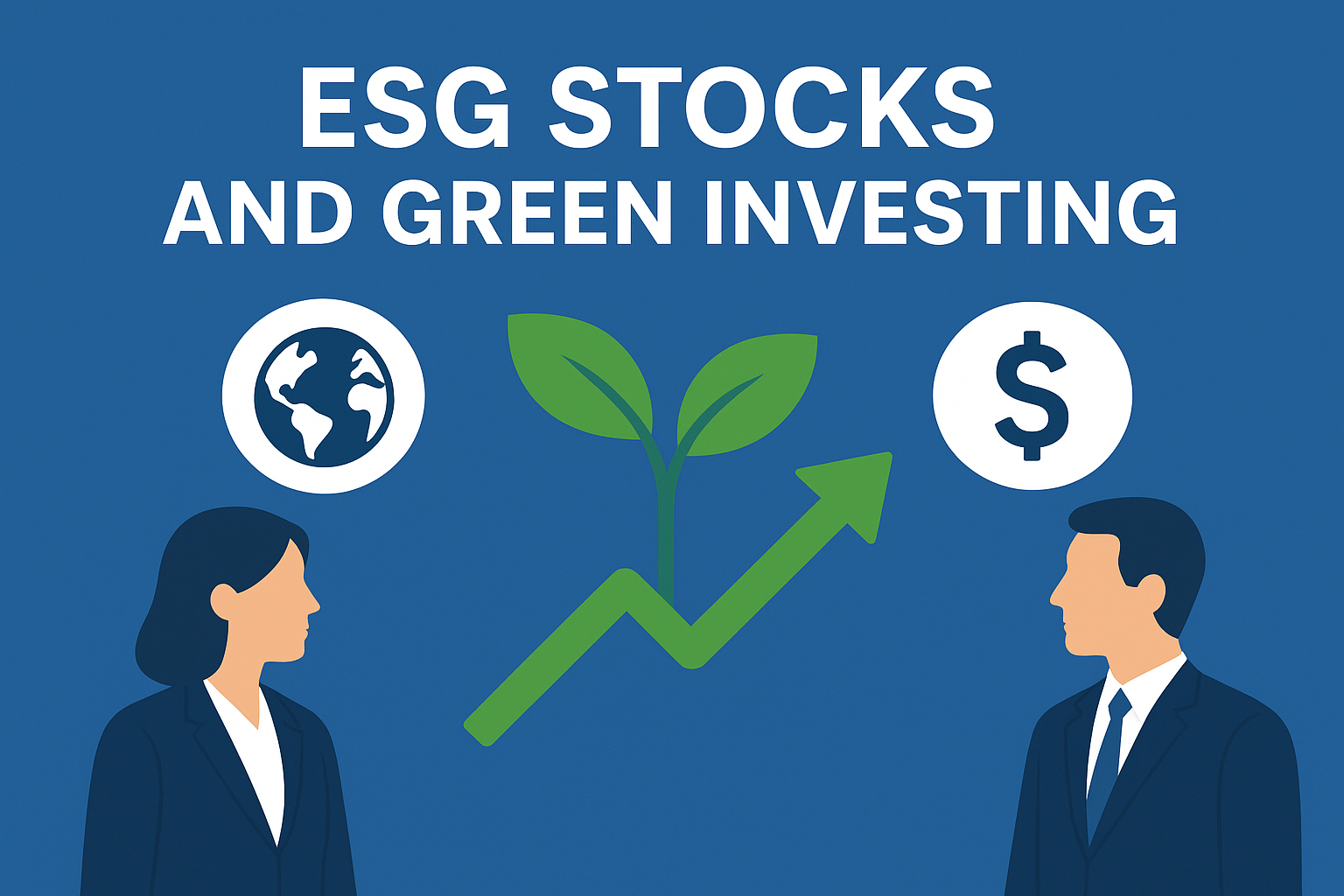
By Savings UK Ltd
Over the past decade, environmental, social, and governance (ESG) investing has moved from a niche interest to a major force in global capital markets. As climate concerns, regulatory pressures, and shifting consumer values reshape the corporate landscape, investors are increasingly seeking portfolios that deliver both financial returns and positive societal impact.
In 2025, ESG-focused strategies, especially those centred on clean tech and renewable energy, are attracting significant capital. Yet with opportunity comes complexity: definitions of “sustainable” vary, ESG ratings can be inconsistent, and the performance of green assets depends on policy, innovation, and market cycles.
This article explores the evolving ESG investment landscape, the drivers behind green investing, the role of renewable energy and clean technology, and practical considerations for building sustainable portfolios.
What ESG investing means today
ESG investing integrates environmental, social, and governance factors into the investment process. In practice, that means going beyond traditional financial analysis to assess how companies manage issues like carbon emissions, labour standards, diversity, board accountability, and community impact.
For some investors, ESG is about avoiding “harmful” sectors such as coal, tobacco, or controversial weapons. For others, it’s about actively funding solutions — from renewable energy and sustainable agriculture to green infrastructure and water management. Increasingly, asset managers blend these approaches, screening out high-risk companies while allocating capital to leaders in sustainability.
The rise of green investing
Several trends are driving the rapid growth of ESG and green investing:
-
Climate urgency – Rising global temperatures, extreme weather events, and mounting climate science evidence have shifted both public opinion and policymaker priorities. Governments are committing to net-zero targets, and these commitments are translating into subsidies, tax incentives, and regulations that favour clean industries.
-
Investor demand – Pension funds, sovereign wealth funds, and retail investors are demanding more responsible investment products. Many institutional mandates now include explicit ESG or climate criteria.
-
Corporate adaptation – Companies are increasingly integrating ESG principles into their operations, not just to satisfy investors but to manage long-term risks and align with shifting consumer expectations.
Clean tech: innovation and opportunity
Clean technology (“clean tech”) encompasses innovations that reduce environmental impacts, improve energy efficiency, and replace carbon-intensive processes. This includes renewable energy generation, battery storage, electric vehicles, carbon capture, sustainable agriculture technologies, and more.
In 2025, the clean tech sector continues to benefit from:
-
Policy support – Governments worldwide are providing subsidies, tax credits, and research grants for renewable energy, energy storage, and decarbonisation projects.
-
Falling costs – Solar and wind power are now competitive with or cheaper than fossil fuels in many markets. Advances in battery technology are improving the economics of electric vehicles and grid storage.
-
Corporate adoption – Major industries, from manufacturing to retail, are adopting clean tech to reduce emissions and improve efficiency.
For investors, clean tech offers growth potential but also volatility. Early-stage technologies can be risky, and returns often depend on regulatory stability and market adoption rates.
Renewable energy: the backbone of the transition
Renewable energy is at the heart of green investing. Solar, wind, hydropower, and emerging sources like green hydrogen are critical to decarbonising the global economy.
From an investment perspective, renewable energy companies offer exposure to long-term structural growth. Demand for clean electricity is expected to rise sharply as electric vehicles, heat pumps, and industrial electrification expand.
However, investors must navigate challenges:
-
Grid integration – Variable output from solar and wind requires storage and grid upgrades.
-
Permitting and infrastructure delays – Large-scale projects can face regulatory hurdles and community resistance.
-
Commodity input costs – Renewable equipment depends on materials like lithium, cobalt, and rare earth metals, which can be volatile.
Well-managed renewable energy portfolios often diversify across technologies, geographies, and stages of project development to balance risk and reward.
Building sustainable portfolios
Creating a truly sustainable portfolio involves more than simply adding a few ESG-branded funds. Investors should consider:
-
Clear objectives – Define whether the goal is risk mitigation, values alignment, or impact generation.
-
Due diligence on ESG ratings – ESG scoring systems vary widely. Understanding the methodology behind a rating is critical.
-
Sector diversification – Avoid overconcentration in one “hot” theme. Renewable energy and clean tech are important but should be complemented by leaders in other sectors, such as sustainable finance, low-carbon manufacturing, and green infrastructure.
-
Active engagement – Many ESG investors actively engage with companies through shareholder voting and dialogue to encourage better practices.
Sustainable portfolios can be constructed using a mix of stocks, bonds, and alternative assets, including green bonds, sustainability-linked loans, and infrastructure funds.
Ethical investing: values and performance
One common misconception is that ethical or ESG-focused investing necessarily means sacrificing returns. While some exclusions (such as avoiding high-performing but unsustainable sectors) can impact short-term performance, many studies have shown that companies with strong ESG profiles can outperform over the long term by reducing regulatory, reputational, and operational risks.
Moreover, the green transition represents one of the largest capital reallocations in history. Trillions of dollars are expected to flow into clean energy, sustainable agriculture, and other low-carbon solutions over the coming decades. Investors positioned in these areas could benefit from both financial and societal gains.
Risks in ESG and green investing
Despite the opportunities, ESG and green investing carry their own risks:
-
Greenwashing – Some companies and funds overstate their ESG credentials. Rigorous analysis is essential to avoid investing in superficially “green” assets that don’t deliver real-world impact.
-
Policy shifts – Political changes can influence subsidies, tax incentives, or regulations that green industries depend on.
-
Market cycles – Like any growth sector, clean tech and renewable stocks can be sensitive to interest rates, input costs, and investor sentiment.
-
Data limitations – ESG data is improving but still inconsistent, making comparisons challenging.
Mitigating these risks requires diversification, careful selection of investment managers, and staying informed about policy and market developments.
Climate change: the long-term driver
Ultimately, climate change is the most powerful long-term driver of ESG and green investing. The costs of inaction are rising, from physical damage caused by extreme weather to economic disruptions in agriculture, infrastructure, and health.
For investors, the transition to a low-carbon economy is not just a moral imperative but a structural economic shift. Companies that adapt early — by reducing emissions, improving resource efficiency, and innovating in sustainable products — are likely to enjoy competitive advantages in the years ahead.
Recommendations from Savings UK Ltd
For those considering ESG and green investments in 2025:
-
Start with a clear ESG policy – Whether managing your own portfolio or working with an advisor, define your principles and investment criteria from the outset.
-
Diversify your green exposure – Spread investments across different sectors, technologies, and geographies.
-
Look for credible impact – Focus on companies and funds with measurable sustainability outcomes, not just marketing claims.
-
Stay engaged – Monitor your holdings, vote your shares, and support transparency in corporate ESG reporting.
-
Think long-term – ESG and green investing are best approached with a multi-year horizon to ride out market volatility.
Conclusion: aligning profit with purpose
ESG and green investing are no longer niche trends — they are integral to the future of global finance. As climate challenges intensify and public demand for corporate responsibility grows, the companies that lead on sustainability will be well-placed to thrive.
For investors, this is both a challenge and an opportunity. The challenge lies in navigating inconsistent ESG metrics, policy uncertainty, and market volatility. The opportunity lies in aligning capital with solutions that will shape a cleaner, more resilient global economy.
With careful strategy, rigorous analysis, and a long-term perspective, ESG and green investing can deliver the rare combination of competitive financial returns and meaningful positive impact — the ultimate alignment of profit with purpose.
