
Global Oil Supply Chain Disruptions
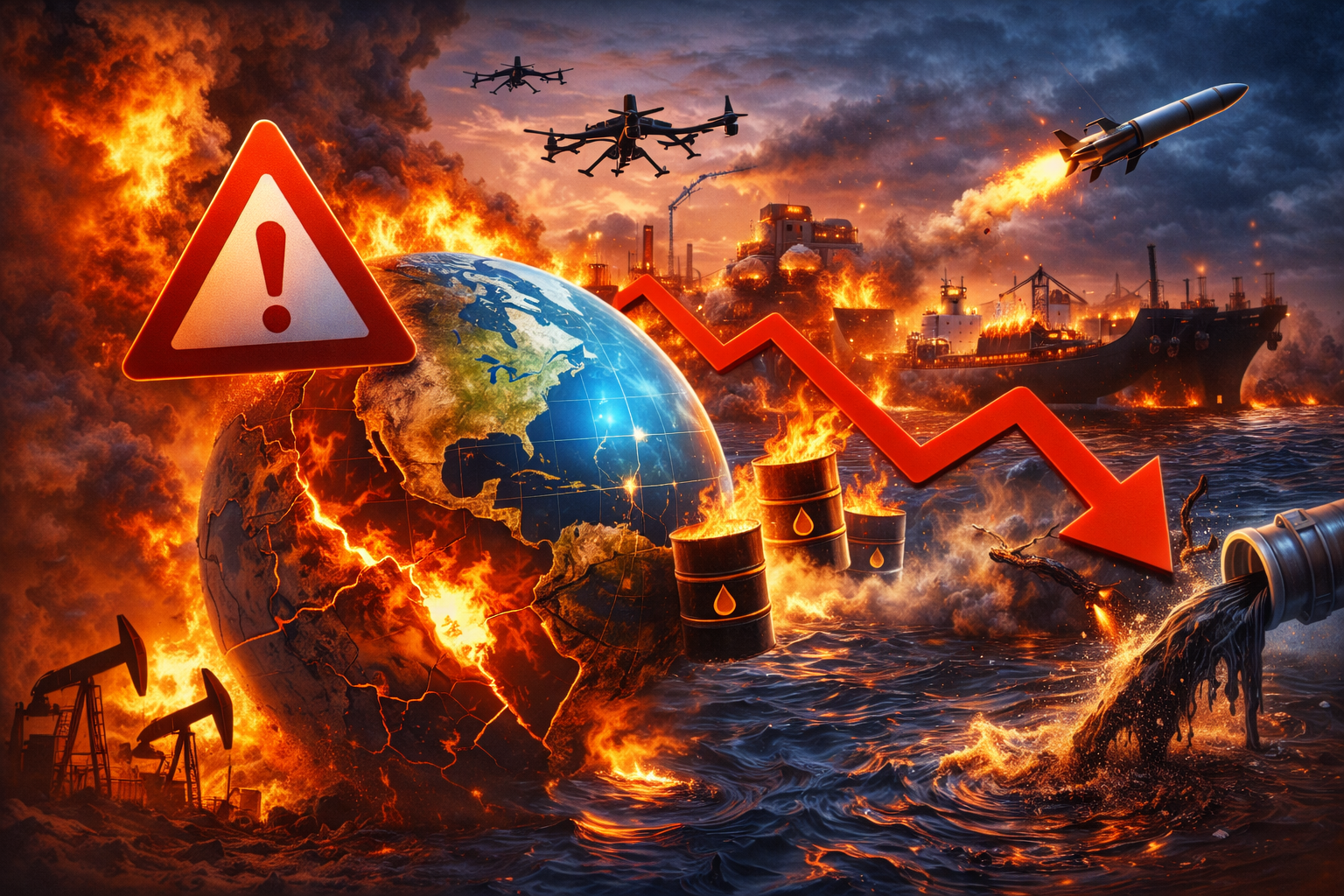
By Savings UK Ltd – Energy Market Analysis
Introduction
The global oil market is a complex and interconnected system that relies on stable production, secure shipping routes, and predictable geopolitical conditions. Over the past decade, however, oil supply chains have experienced increasing disruptions caused by geopolitical conflicts, maritime security threats, and strategic production decisions by oil-producing nations. Recent tensions involving the United States, Israel, and Iran have intensified these challenges, raising concerns about energy security and global economic stability.
Oil remains the backbone of the global energy system. More than one-third of global energy demand is still met by oil and petroleum products, making disruptions to crude oil supply chains particularly impactful. Events such as war in the Middle East, attacks on shipping routes, and production decisions by OPEC members can quickly trigger supply shocks, causing volatility in oil prices and economic uncertainty worldwide.
This article examines the causes, risks, and implications of global oil supply chain disruptions, focusing on geopolitical conflicts, maritime chokepoints, and the strategic role of OPEC.
The Structure of the Global Oil Supply Chain
The global oil supply chain involves multiple stages, including crude oil extraction, transportation, refining, and distribution. Major oil producers such as Saudi Arabia, the United States, Russia, and members of the Organization of the Petroleum Exporting Countries (OPEC) supply crude oil to global markets. From production sites, crude oil is transported through pipelines, tankers, and shipping routes to refineries and ultimately to consumers.
Shipping plays a crucial role in this process. Maritime transport accounts for a significant portion of global oil trade, with tanker fleets moving millions of barrels of crude oil daily across international waters. Disruptions in these maritime routes can therefore have immediate consequences for global energy markets.
Key maritime chokepoints including the Strait of Hormuz, the Suez Canal, and the Bab el-Mandeb Strait are especially critical to oil flows. Any interruption in these routes can significantly reduce supply availability and increase transportation costs.
OPEC and the Control of Global Oil Supply
OPEC remains one of the most influential organizations in the global energy market. By coordinating production levels among member countries, OPEC can influence global oil prices and market stability.
Production cuts or increases by OPEC members are often used to balance supply and demand. However, geopolitical tensions can disrupt these coordinated efforts. Conflicts involving major oil-producing regions can lead to sudden supply shocks, forcing OPEC members to adjust production strategies to stabilize markets.
For example, when geopolitical instability reduces oil output from certain regions, OPEC producers may increase supply to prevent severe shortages. Conversely, uncertainty about future demand or economic downturns may lead to coordinated production cuts.
The challenge for OPEC is balancing market stability with geopolitical realities that are often beyond its control.
Supply Shocks and Price Volatility
Supply shocks occur when unexpected events reduce oil production or disrupt transportation networks. These shocks can be triggered by war, sanctions, infrastructure damage, or political instability.
Recent geopolitical developments in the Middle East illustrate how quickly supply shocks can emerge. Escalating conflict involving the United States, Israel, and Iran has raised concerns about the stability of energy supplies from the Persian Gulf. The region accounts for a significant share of global oil production and exports.
The Strait of Hormuz is particularly critical because roughly 20% of the world’s oil supply passes through this narrow maritime route. Any closure or disruption in this area could severely restrict global oil flows and drive prices higher.
Recent reports suggest that tensions in the region have already reduced shipping activity dramatically, with traffic through the Strait of Hormuz falling by more than 90% during the crisis.
Such disruptions can rapidly push oil prices upward, affecting fuel costs, transportation expenses, and inflation worldwide.
Impact of the US–Israel Conflict and Regional Tensions
The ongoing geopolitical conflict involving the United States, Israel, and Iran represents one of the most significant threats to global oil supply chains in recent years. Military strikes, retaliatory attacks, and threats against shipping vessels have created uncertainty across global energy markets.
Energy prices have already responded to these developments. Oil prices have surged as traders anticipate potential shortages if the conflict escalates further. Some analysts warn that Brent crude prices could exceed $100 per barrel if disruptions persist.
The conflict has also forced energy producers and shipping companies to reconsider risk exposure in the region. Attacks on infrastructure and maritime vessels have increased insurance costs and reduced tanker traffic, further tightening supply chains.
Moreover, escalation could affect oil infrastructure in major producing countries such as Saudi Arabia, Qatar, and Iraq. Damage to pipelines, export terminals, or storage facilities could significantly reduce global supply capacity.
Shipping Routes Under Pressure
Global oil trade depends heavily on secure maritime shipping routes. However, these routes have become increasingly vulnerable to geopolitical tensions and security threats.
In recent years, attacks on shipping vessels in the Red Sea and Gulf of Aden have forced shipping companies to reroute oil tankers away from the Suez Canal and other critical corridors. These rerouting decisions increase travel distances and transportation costs, ultimately raising energy prices.
The Red Sea crisis has demonstrated how even localized conflicts can disrupt global supply chains. When shipping companies avoid high-risk areas, tanker availability decreases and delivery times increase.
Similarly, war-related risks in the Persian Gulf have forced shipping companies to suspend operations or delay shipments in some cases. These disruptions illustrate how fragile global oil logistics can be when geopolitical risks escalate.
Risks to Global Energy Security
Energy security refers to the reliable and affordable supply of energy resources. Oil supply chain disruptions pose a major threat to this stability.
When supply shocks occur, countries that rely heavily on imported oil may face shortages, higher energy costs, and economic pressure. Developing economies are particularly vulnerable because energy price spikes can increase inflation and strain public finances.
The Middle East remains central to global energy security because it produces a large share of the world’s oil. If conflicts in the region intensify, global markets may experience prolonged supply shortages.
Governments often respond by releasing strategic petroleum reserves or seeking alternative energy sources. However, these measures provide only temporary relief and cannot fully offset large-scale disruptions.
Economic Consequences of Oil Supply Disruptions
Oil supply disruptions have far-reaching economic consequences. Higher energy prices increase production costs for industries ranging from manufacturing to transportation.
When crude oil prices rise sharply, inflation tends to increase as fuel costs are passed on to consumers. Rising energy costs can also slow economic growth by reducing consumer spending and business investment.
Recent market developments highlight these risks. Oil prices have already surged amid concerns about shipping disruptions and reduced tanker traffic in the Persian Gulf.
If the conflict expands or persists for an extended period, global economic growth could slow significantly.
Strategic Responses and Future Outlook
Governments and energy companies are increasingly focused on improving the resilience of oil supply chains. Several strategies are being adopted to reduce the impact of disruptions:
1. Diversification of supply sources
Countries are expanding energy partnerships with multiple suppliers to reduce reliance on a single region.
2. Strategic petroleum reserves
Many nations maintain emergency oil reserves that can be released during supply crises.
3. Investment in alternative energy
Renewable energy and electric mobility are being promoted as long-term solutions to reduce dependence on crude oil.
4. Improved maritime security
International naval cooperation and security operations aim to protect vital shipping routes.
While these strategies can enhance resilience, geopolitical risks will likely remain a persistent challenge for global energy markets.
Conclusion
Global oil supply chains are increasingly vulnerable to geopolitical conflicts, maritime security threats, and strategic production decisions. Recent tensions involving the United States, Israel, and Iran highlight how quickly supply disruptions can emerge and affect global markets.
Critical shipping routes such as the Strait of Hormuz remain central to the stability of global energy supplies. Any disruption in these corridors can trigger significant supply shocks and price volatility.
Organizations like OPEC play a crucial role in balancing global supply, but geopolitical risks often limit their ability to maintain market stability.
For governments, investors, and energy companies, understanding these risks is essential for managing energy security and economic resilience. As global demand for energy continues to grow, ensuring the stability of oil supply chains will remain one of the most important challenges in the global economy.
