
US PUBLIC HEALTH OUTLOOK 2026
Executive Summary
System Transformation and Expenditure Growth
Between 2016 and 2026, the United States public health system underwent structural transformation driven by digital integration, value-based reimbursement, and pandemic-related stressors. Healthcare expenditure increased from 17.8% of GDP in 2016 to approximately 19–20% during pandemic peaks, stabilizing at 19.4% by 2026 (projected). Despite high spending, quality and equity challenges persisted, reinforcing federal reforms under the Centers for Medicare & Medicaid Services and digital mandates from the Office of the National Coordinator for Health Information Technology.
Epidemiological & Quality Trends
Age-adjusted mortality rose sharply during pandemic years (835 per 100,000 in 2020) before declining to a projected 740 per 100,000 by 2026. Hospital-acquired infections (HAIs), indexed at 100 in 2016, increased to 115 during peak disruption (2020) but recovered to 88 by 2026 (projected).
Readmission rates improved from 15.5% (2016) to 14.5% (2026 projected), reflecting predictive analytics integration and strengthened discharge planning. Teaching hospitals demonstrated faster recovery due to advanced ICU capacity and embedded AI surveillance, while medium-sized hospitals faced capital and staffing constraints.
Digital Maturity & AI Integration
EHR adoption exceeded 85% by 2016 and approached near-universal compliance by 2026. Telehealth utilization expanded dramatically from 5% of outpatient visits in 2016 to 38% in 2020, stabilizing at 20% by 2026.
The Digital Maturity Index increased from 55 to 88 in teaching hospitals and 48 to 80 in medium-sized hospitals (2016–2026 projected), correlating with faster infection recovery and quality stabilization.
Workforce Resilience & Financial Sustainability
Workforce burnout and staffing shortages during 2020–2022 significantly disrupted infection prevention and quality systems. Labor costs surged, and temporary staffing reliance increased. Digital workflow automation partially mitigated administrative burden but did not substitute for staffing capacity.
Strategic Outlook Toward 2030
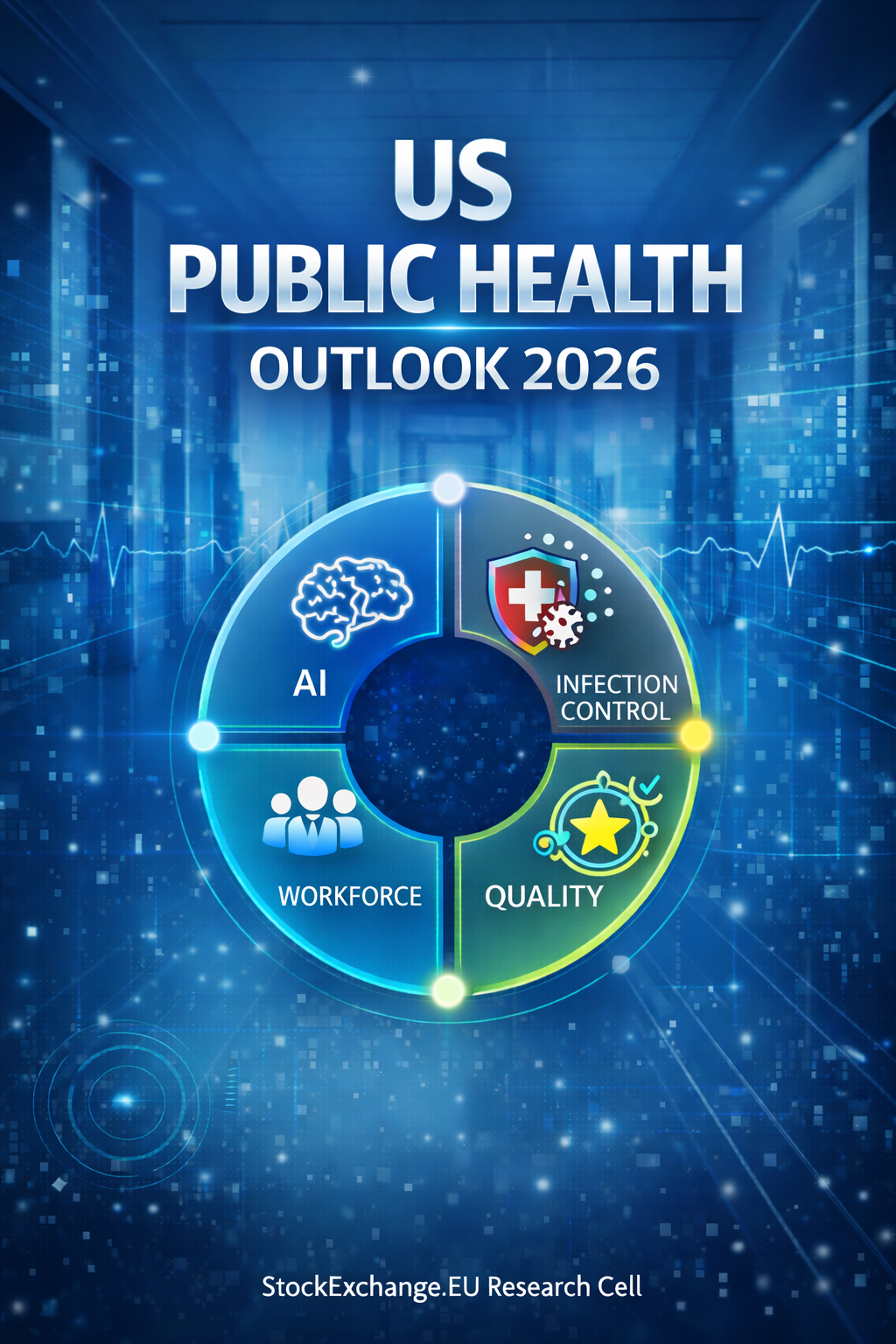
Hospitals that synchronize digital infrastructure, infection intelligence, workforce stabilization, and governance accountability demonstrate superior clinical and financial outcomes. The report projects that sustained AI integration and infection analytics could reduce HAIs by up to 40% by 2030, stabilize readmissions below pre-2016 baselines, and improve margin resilience through value-based alignment.
The 2026–2030 window represents a decisive modernization phase for US public health institutions.
Citation: (formatted-apa)
License
Copyright (c) 2026 SRJ Research Team (Author)

This work is licensed under a Creative Commons Attribution 4.0 International License